


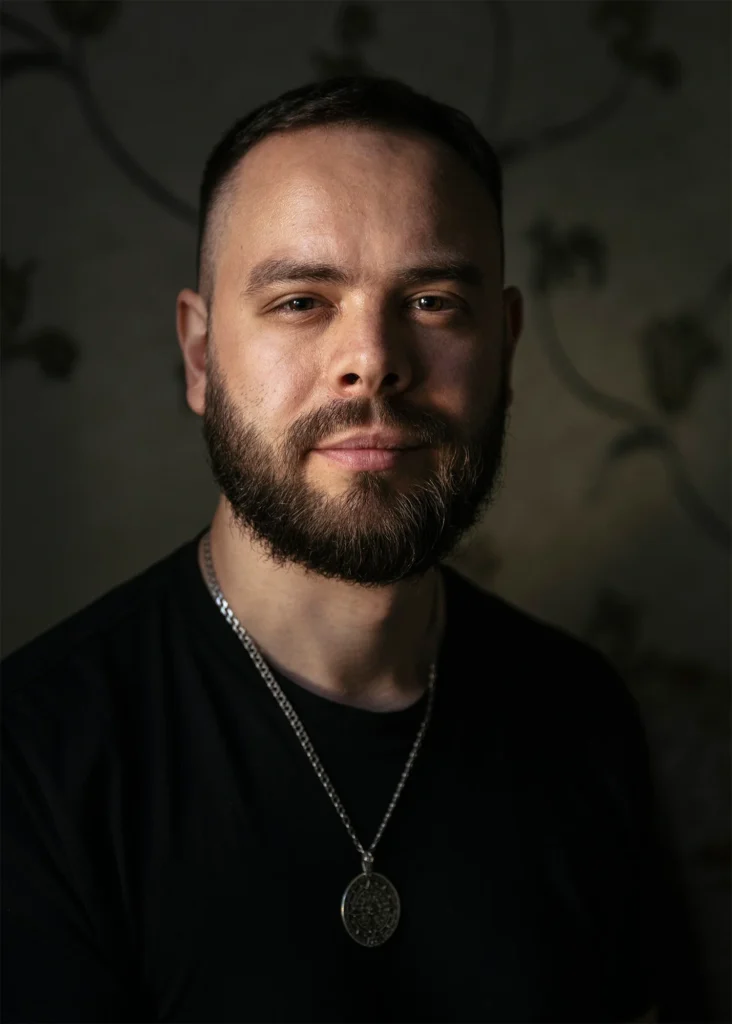
Interview with Egor Dubrovsky, Co-Founder and CEO of Filmustage
Filmustage CEO Egor Dubrovsky explains why the biggest market is not always the best first market. By focusing on indie filmmakers with urgent workflow needs, Filmustage found product-market fit and built traction.
Many startup founders dream of landing the biggest customers first. They want the major enterprise client, the household-name brand, or the largest buyer in the industry. But sometimes the biggest market is not the market most ready to adopt a new product.
That was one of the most important lessons for Egor Dubrovsky, co-founder and CEO of Filmustage, an AI-powered pre-production platform for filmmakers and production teams.
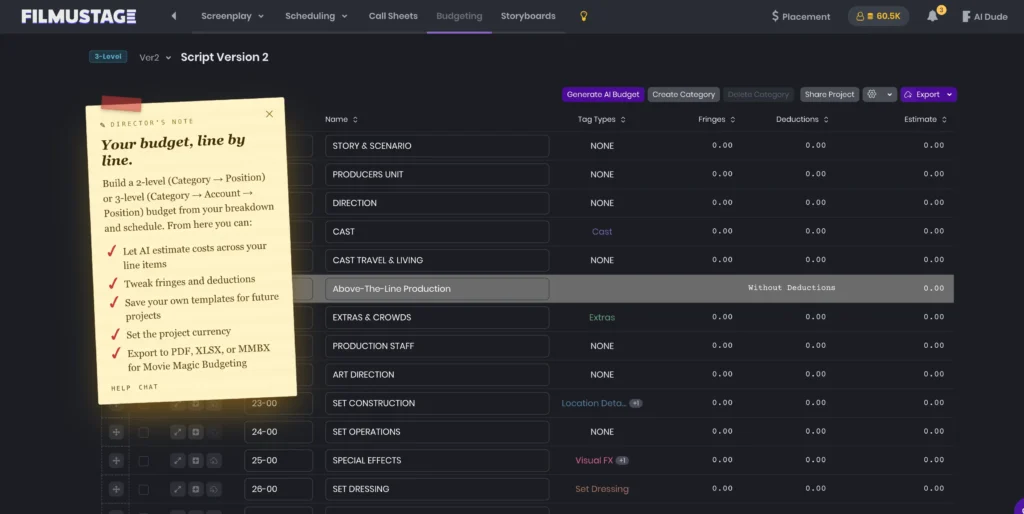
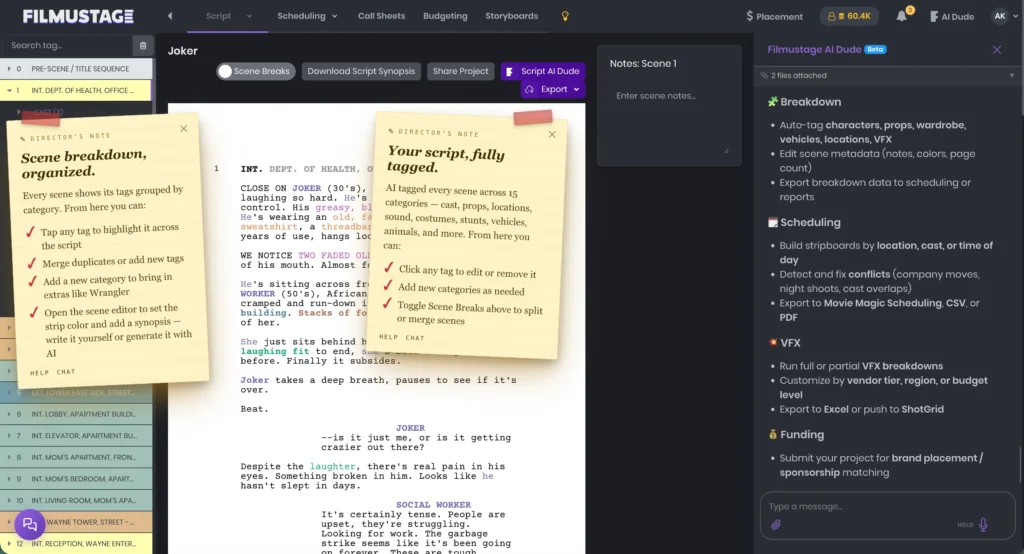
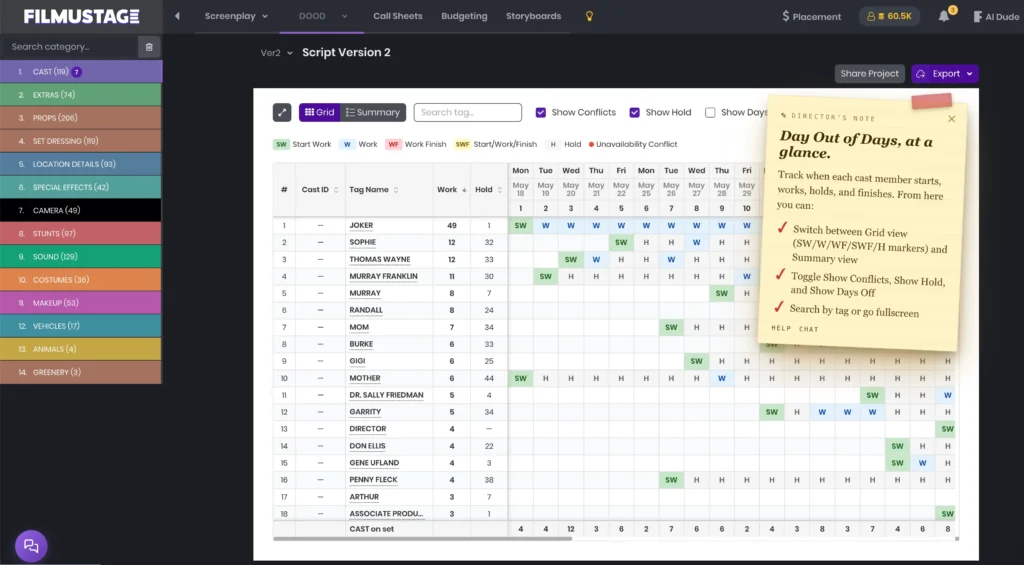
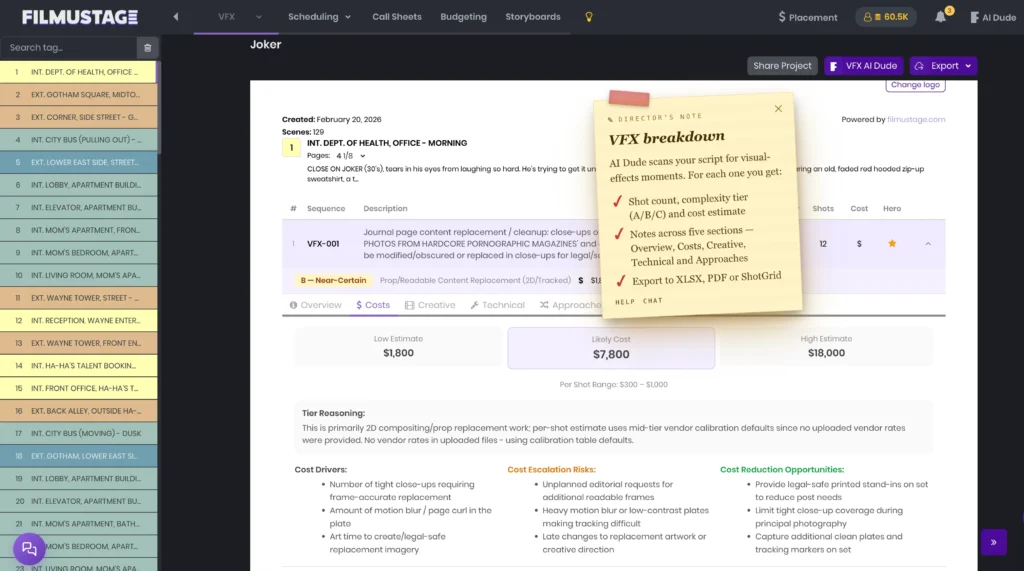
Filmustage helps automate time-consuming pre-production tasks such as script breakdowns, scheduling, budgeting, storyboarding, synopsis creation, risk analysis, and call sheets. The company has helped more than 30,000 filmmakers save 3.5 million hours and an estimated $119 million in production budgets. Its platform has been used on productions including Masters of the Air on Apple TV and The Gentlemen on Netflix.
But Filmustage did not gain traction by pushing first into the biggest studios. The company found its early momentum by focusing on independent filmmakers and smaller production teams — customers with urgent needs, limited resources, and fewer barriers to adoption.
For founders, the story offers an important startup lesson: product-market fit is not always found where the market looks largest. It is often found where the pain is strongest.
For a deeper business analysis of Filmustage’s AI startup journey, read the companion article on PowerHomeBiz: How Filmustage Found Product-Market Fit in an AI-Resistant Industry.
Table of Contents
Why Filmustage’s Story Matters for Startup Founders
Startups often fail not because the product is bad, but because the first market is wrong. A product may solve a real problem, but if the customers are too slow to adopt, too skeptical, or too difficult to reach, early traction can stall.
That is why market validation matters. Before investing too much time and money into a product, founders need to understand who feels the problem most urgently, who can make decisions quickly, and who is willing to test a new solution. StartingUpTips has a practical guide on this process in How to Validate Your Business Idea in 7 Days.
Filmustage’s path shows what happens when a startup stops chasing the biggest possible buyer and starts listening to the customers most ready to act.
What first showed you that film pre-production had a workflow problem worth solving?
I spent over ten years in the film industry, founded two media production companies, and worked on projects for Uber, TikTok, the UN, and Netflix.
The push itself was almost accidental. While I was helping a friend with a shoot in Los Angeles, I drove to another friend’s house in San Francisco. That evening, my car was broken into, and a backpack with my laptop, camera, and documents was stolen.
I was stuck in the U.S. for a long time, waiting for new papers. During that time, I was working on locations where pilots were filmed for Netflix and Amazon Prime Video.
That was where I saw that script breakdowns were still being done manually with pencil and paper, creating mountains of printouts. I realized this consumed an enormous amount of time and created room for errors.
I couldn’t understand why, in an era where technology is everywhere, professionals were still spending days on a routine that could be automated.
That was the problem worth solving.
What surprised you most about how much of the process still depended on spreadsheets, paperwork, and manual coordination?
What surprised me most was that even in the United States, a place considered the center of the film industry, the most routine processes remained analog.
I was naive. I thought that in Hollywood, everything had been automated a long time ago. But pre-production was still based on printouts, markers, and endless tables.
Another problem was fragmentation. A team of hundreds of people might work in different programs, while communication is spread across multiple channels. A producer or assistant director then has to manually pull together storyboards, call sheets, shooting schedules, and logistics.
I interviewed my first potential customers right on the set. Once I went back, I built a team and started working on Filmustage.
Startup Lesson: Look for the Workflow Pain Others Ignore
Many startup ideas begin with a founder noticing a gap that insiders have accepted as “just the way things are.” In Filmustage’s case, the gap was not glamorous. It was paperwork, scheduling, printouts, and manual coordination.
That is often where strong startup ideas begin. A market gap does not always look like a brand-new invention. Sometimes it is a familiar frustration that everyone complains about but no one has fixed. If you are still searching for a startup opportunity, read StartingUpTips’ guide on how to find a gap in the market.
Why do you think some industries resist innovation even when the existing process is inefficient?
In cinema, the price of a mistake on set is very high. One lost day of shooting can cost a lot of money, so people stick to proven tools and do not want to risk something new.
There is also a deep respect for craft and tradition. In film, knowledge is passed on through experience. The industry resists change because change has to be earned.
The market has also been using established tools like Movie Magic or Final Draft for years. Any new solution must fit into those habits, not break them.
How did skepticism toward AI shape the way you built and positioned Filmustage?
Our main message is simple: Filmustage supplements and strengthens the skills of filmmakers by removing manual routine. The creative process stays with the filmmaker.
Inside the company, we came up with the philosophy of “filmmakers for filmmakers.” The tools are made by people who know the industry from the inside.
Technology-wise, our AI is narrow. We have been training our own model since 2018 to recognize and categorize script elements. It is analytical AI, not the generative kind that creates actors or writes scripts.
We also integrate with tools the industry already uses, such as Movie Magic and Final Draft. That way, Filmustage fits into a filmmaker’s existing workflow.
Why AI Positioning Matters
AI can be a powerful selling point, but in some markets it can also trigger fear. In entertainment, concerns about AI became especially visible during the 2023 labor disputes. The Writers Guild of America has published guidance on AI protections for writers, while SAG-AFTRA has also emphasized digital replica and AI-related protections for performers.
For AI founders, the lesson is clear: do not assume customers will hear “AI” and immediately think “better.” Some will think “risk,” “replacement,” “loss of control,” or “legal uncertainty.”
That makes positioning critical. Founders need to explain what their product does, what it does not do, and how it protects the people who use it.
What did you learn from selling an AI product into a market where people feared automation or creative displacement?
The most important lesson is that you need to be honest about the types of AI and talk about fear directly.
It is one thing to have AI that tries to replace live actors with digital models. That raises real moral questions and affects people and their work.
It is another thing to have a tool like ours that speeds up storyboarding and helps assistant directors, line producers, cinematographers, and VFX artists avoid doing repetitive manual work.
When you explain that clearly, people understand the difference.
The second lesson is that trust is built not by words, but by real users and respected people in the industry. We have been helped by ambassadors like Roger Christian and advisors such as Byron Saltysiak, Chris LeDoux, and Barry Loudis.
My advice to the market has always been: don’t panic, things will be better than you anticipate.
How did the WGA/SAG-AFTRA strike affect your fundraising and go-to-market plans?
The 2023 strikes hit the industry hard. People were afraid of losing their jobs and being replaced by AI.
We decided not to pretend this did not affect us. Instead, we prioritized the people who continued to work despite the challenges: independent filmmakers.
They work with tight budgets and deadlines, and during the strike, the pressure on them only increased. We listened to their feedback and quickly adapted the product to their needs.
We stuck to our goal of “help, not replace.” That is why people continued to rely on the platform.
Focusing on indie filmmakers gave them real support when they needed it most. It also strengthened the platform enough to help us survive the strike and raise $1.5 million in seed investment. Raw Ventures announced that it led Filmustage’s $1.5 million seed round, alongside Geek Ventures and other investors.
What made indie filmmakers and smaller production teams a better early market than major studios?
They had the most urgent need and the least friction when it came to making decisions.
Indie teams work with tight budgets and tight schedules. For them, saving time and money can be a matter of survival for the project.
They are also willing to try new things faster because the decision is usually made by one or two people, not by a long chain of approvals.
They see the benefit immediately, and we get honest feedback immediately.
Startup Lesson: The First Market Should Help You Learn Faster
A good early market is not just one that can pay. It is one that helps the startup learn quickly.
Independent filmmakers gave Filmustage something major studios could not provide as easily: direct usage, fast feedback, and urgent problems. That feedback loop helped the product improve.
For founders, this is why customer feedback should not be treated as an afterthought. It can shape the product, sharpen positioning, and reveal which customers are truly ready to buy. StartingUpTips explains this more in Why Feedback is Important for Your Startup Business.
What changed once you focused on customers with a more urgent need?
The biggest change was learning speed.
Listening closely to indie users helped us tailor features directly to their needs and iterate faster. It made us more adaptable and flexible.
Instead of building around our assumptions, we built around how filmmakers actually work. That is how we found product-market fit.
What should founders do when the biggest market is not the market most ready to adopt their product?
Go where the need is most visible and the resistance to implementation is the lowest, even if that market is not the biggest.
First, win over users with an urgent need. Collect proof of value and real cases from them. After that, you can move up to a larger market.
We went this way: indie first, then studios.
You should not push a market that is not ready yet. Start by building the product and your reputation. Your own case studies can help influence how ready the larger market becomes.
How do you balance AI efficiency with respect for creative concerns?
I stick to the principle that AI should take care of repetitive things, such as logistics and routine, while creative decisions stay with humans.
Our task is to automate time-consuming work such as storyboarding, scene editing, synopsis drafts, and risk analysis. But the filmmaker always makes the final call.
This is a human-in-the-loop approach. The algorithm prepares the draft, and the human monitors, corrects, and decides.
Respecting creativity also means respecting what filmmakers create. No AI models are trained on users’ scripts or data. Their work stays entirely theirs.
What practical lessons can other AI startup founders learn from building in a resistant industry?
First, insider knowledge is invaluable. Trust in the film industry is not given to demos or outsiders. It comes from people who understand the work and have real weight in the industry.
Second, integrate into the tools and habits the market already uses. Do not try to reinvent the wheel too early.
Third, make AI that is specific, useful, and connected to a clear return on investment.
Lastly, listen carefully to users and iterate quickly. Without feedback from filmmakers, our product would not be as accurate as it is.
Looking back, what was the most important decision that helped Filmustage move from near-shutdown to traction?
The most important decision was during the strike, when we chose to focus on the independent filmmaking community and stay true to our mission of “helping, not replacing.”
Rather than chasing big studios at a time when the industry was paralyzed and scared, we chose to serve the people with an urgent need who were still working.
That decision led to user loyalty, rapid product development, and later allowed us to scale to Tier-1 studios, launch Enterprise, and raise seed investment.
We survived and grew because we found the right first market and did not betray the principle that made users trust us.
Startup Lessons from Filmustage
Filmustage’s story offers several practical lessons for founders:
1. The biggest market may not be the best starting point
Large customers can look attractive, but they often move slowly. Smaller customers with urgent pain may be better for early traction.
2. Resistance is useful information
When a market resists change, founders should ask why. The answer may reveal fear, risk, workflow complexity, or trust issues that the product must address.
3. Positioning matters as much as features
Especially with AI, customers need to understand whether the product helps them, replaces them, or creates new risks.
4. Product-market fit comes from real usage
Filmustage learned faster when it focused on indie filmmakers who used the product and gave direct feedback.
5. Trust must be earned
In traditional industries, a new tool has to prove that it respects the way people work. Integrations, case studies, ambassadors, and clear data practices all help reduce resistance.
6. Build for the customer who needs the product now
A startup can waste time chasing customers who agree the problem exists but are not ready to act. Early traction comes from customers who feel the pain strongly enough to change behavior.
How Founders Can Apply This Lesson
Before choosing your first target market, ask:
- Who feels the problem most urgently?
- Who can make a buying decision quickly?
- Who has the least resistance to trying something new?
- Who will give useful feedback?
- Who can become a credible case study?
- Who will help you improve the product faster?
These questions should become part of your startup research and marketing plan. If you are planning your launch, StartingUpTips also has a helpful guide on creating a marketing plan for your business and another on how to assess the growth potential of your business.
Final Thoughts
Filmustage did not find traction by forcing the film industry to accept AI. It found traction by solving a painful workflow problem, respecting the creative process, and focusing first on the customers who needed help most.
For founders building in slow-moving or skeptical industries, the lesson is clear: resistance is not always a reason to quit. Sometimes it is a sign that you need to find the right entry point.
The biggest opportunity may not be the biggest customer. It may be the customer who needs your solution badly enough to try it first.

