


Subcontractors may pay for materials and labor months before receiving payment for completed work. In this Q&A, Earlytrade CEO Guy Saxelby discusses construction payment delays, pay-when-paid clauses, financing risks, early payment programs, and the steps smaller contractors can take to protect their cash flow.
Key Takeaways
- Construction companies frequently pay for labor, materials, equipment, and insurance before receiving customer payments.
- A profitable contract can still create a cash flow crisis when payment timing is poorly aligned with operating expenses.
- Subcontractors should understand who is funding the project and review all contingent payment provisions before signing.
- Credit lines and factoring can provide liquidity, but contractors must consider debt, collateral, fees, and repayment timing.
- Accurate invoicing, current compliance documents, strong customer relationships, and cash forecasting can prevent avoidable delays.
- Early payment platforms may provide another option, but contractors should compare the discount with the full cost of borrowing or waiting.
Introduction
For many new business owners, revenue growth appears to be the clearest sign that a company is succeeding. More contracts should mean more money, greater stability, and more opportunities to expand.
Construction businesses quickly discover that the relationship between growth and financial stability is not always that simple.
A subcontractor may win a valuable contract and complete profitable work, yet still face an immediate cash shortage. Materials may have to be purchased before the first worker arrives on site. Employees and crews must be paid every week or two. Equipment rentals, fuel, insurance, taxes, and administrative costs continue throughout the project.
The customer’s payment may not arrive until 60, 90, or more days after the work has been performed.
That timing gap can place a growing contractor in a surprisingly vulnerable position. The company may be profitable on paper but unable to fund its next payroll without borrowing money, delaying a supplier, or moving cash from another project.
This is one reason entrepreneurs should learn to manage cash flow before rapid growth begins. StartingUpTips offers 30 ways to improve small business cash flow, including faster billing, stronger collections, careful expense management, better supplier terms, and maintaining access to emergency financing. The site’s guide on what to do when cash flow is tight similarly emphasizes collecting receivables quickly and operating a disciplined billing system. become increasingly important for businesses of all types. According to the Federal Reserve’s 2026 Report on Employer Firms, 60% of surveyed small employer firms sought financing during the previous year. Among firms seeking financing, 56% said the funds were needed to meet operating expenses. Although the survey is not limited to construction companies, it demonstrates how often ordinary business operations depend on outside capital. adds another layer of complexity because payment rarely involves only a buyer and a seller.
Money may have to move from a project lender to an owner, from the owner to a general contractor, and from the general contractor to several levels of subcontractors and suppliers. Payment can depend on inspections, insurance documents, change-order approvals, lien waivers, retainage, safety requirements, and the terms of several interconnected contracts.
The subcontractor carries expenses while waiting for that process to work.
For startups and smaller contractors, the lesson is important: do not evaluate a project solely by its expected profit. Evaluate how much cash the project will consume, when that cash will be required, and when payment is realistically expected.
PowerHomeBiz provides additional resources on improving working capital, managing common cash flow problems, and comparing short-term business loans. Business owners considering the sale or financing of invoices can also review its explanation of accounts receivable factoring.
Contracts deserve equally careful attention.
Pay-if-paid and pay-when-paid provisions can affect when—or, depending on the language and jurisdiction, whether—a subcontractor is entitled to payment after an owner fails to pay the general contractor. The American Bar Association notes that the two types of provisions can have different legal effects and that their enforceability varies substantially among jurisdictions. ruction projects have additional prompt-payment requirements. The Federal Acquisition Regulation, for example, establishes rules for proper payment requests, progress payments, retainage, and payment timing under covered federal construction contracts. Those federal provisions should not be assumed to govern private projects, which may instead be controlled by state law and the parties’ contract. ese issues, we spoke with Guy Saxelby, CEO and co-founder of Earlytrade, an early payment marketplace serving the construction industry.
Saxelby explains why subcontractors can struggle even after invoices have been approved, how payment delays affect payroll and project schedules, and why relying on debt to bridge every receivable can create new financial risks.
He also discusses pay-when-paid provisions, project selection, early payment discounts, construction technology, and the practical steps smaller subcontractors can take while waiting to be paid.
His central warning is particularly relevant to entrepreneurs building a young construction company:
“The number one rule is don’t blow yourself up.”
A new contract should help the company grow. It should not require so much working capital—or expose the company to so much concentrated payment risk—that one delayed owner payment threatens the survival of the entire business.
The following Q&A has been edited for formatting and readability.
Table of Contents

Full Q&A
Guy Saxelby is the CEO and Co-Founder of Earlytrade, a dynamic early payment marketplace that helps general contractors generate returns on cash while strengthening their subcontractor networks.
1. Why do subcontractors so often face cash flow problems even when they have approved invoices and profitable work?
Subcontractors have to purchase materials sometimes 90 days in advance, so they’re committing capital before the job even starts. To stay competitive for labor, they have to pay their workforce every seven or fourteen days, so there’s a constant drain on the business. Then they complete the job, submit invoices, hope they don’t get hit with a change order, and if it’s approved, they typically wait 60 to 90 days to get paid. So there’s a lot of waiting and a lot of risk pushed onto them, and even a profitable subcontractor can struggle to access affordable working capital.
Part of the problem is that banks treat subcontractors as the riskiest link in the chain, because risk in construction flows from the owner to the general contractor to the sub. So a strong profit profile doesn’t protect you the way it would in most industries. And if a change order comes through, meaning the scope of work changed and a new payment has to be submitted, the wait starts over again.
2. What makes the construction payment cycle especially difficult compared with other industries?
In a normal retail transaction, you’re matching a purchase order to an invoice and confirming the goods showed up. Construction has a lot more steps than that. Before a general contractor can release payment, they have to work through compliance, insurance, assessment, risk, and safety, and then their general contractor still has to collect from the owner or developer before any of it flows down. So there are more parties involved and more boxes to tick just to release money that’s already been earned.
That gets compounded by something called pay-when-paid, or pay-if-paid depending on the state, which means the general contractor is only required to pay the subcontractor once they’ve been paid by the owner. So no matter how strong your relationship is with your GC, you’re still waiting on the owner, and that’s largely out of your control. It’s why choosing jobs with owners who reliably pay matters so much, and it’s part of why we built Earlytrade the way we did, to give subs a way to manage that risk themselves rather than just absorb it.
3. How do delayed payments affect payroll, materials purchasing, project timelines, and subcontractor stability?
If you’re expecting a payment and it gets delayed, you need to find money elsewhere fast, because your costs don’t stop just because the payment did. You’ve likely got a pipeline of work and teams that need to move to the next job, so you need to plug that gap somehow, which means you need options. The construction working capital cycle can shift very quickly, so being able to access liquidity fast matters more than almost anything else.
That’s the whole reason we built Earlytrade as a dynamic marketplace instead of a fixed credit line. It lets a subcontractor dial their need for cash up or down as the situation changes, and you don’t need to go through an approval process. You just need your rate accepted in the marketplace, so you stay in control of the timing instead of waiting on someone else’s.
4. What are the risks of relying on lines of credit or invoice factoring just to make payroll?
The risk is time and debt. Lines of credit and invoice factoring take a long time to get approved, and there’s a lot of paperwork involved. Depending on the terms, you’re also going into debt, and creditors will require some form of security to back it.
So you might get the cash, but if the collections don’t go the way you expected, you’re putting your business, or some form of property, at risk, because that’s what a lender requires in order to make the loan.
5. How do subcontractor payment delays affect general contractors and the wider construction market?
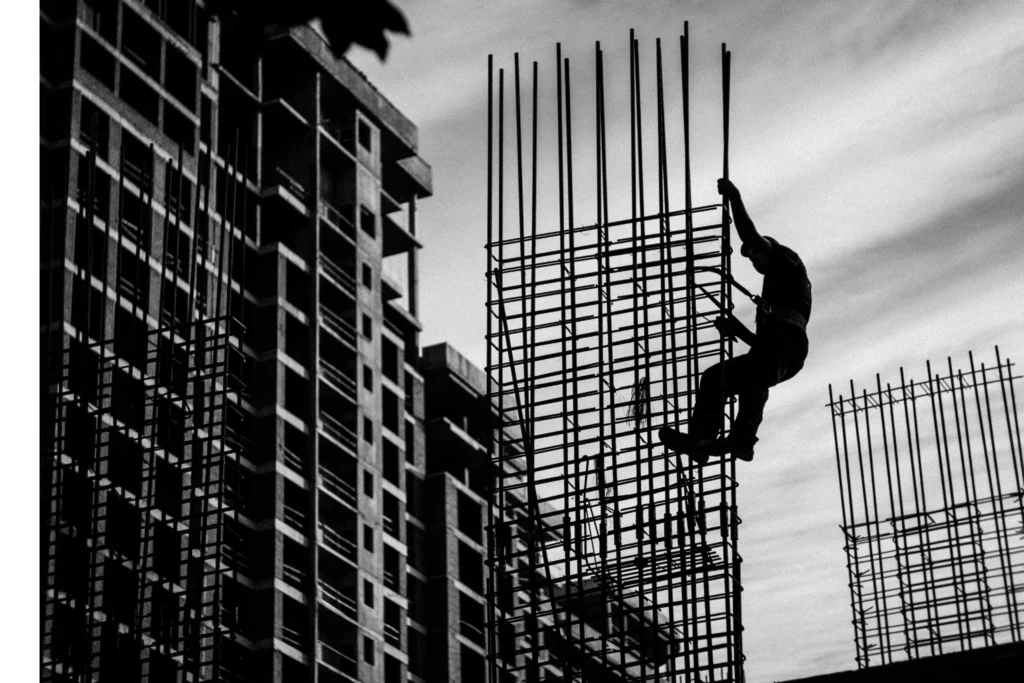
If a GC delays payment, they may not deliver the project outcome they need. The risk is the project comes in over budget or behind schedule, and general contractors make their money by working quickly. So the more delays that stack up, the more money they risk losing. Speed wins in construction.
And one delay creates a domino effect into the next one. If a GC delays payment to a sub who can’t finish their scope, the next subs scheduled in behind them get delayed too. That’s why general contractors typically don’t like to delay in the first place.
6. Why do you think the current payment problems in construction will continue to worsen without innovation?
What we’re seeing in our marketplace is that payment times are getting longer, because owners are taking longer to pay. Earlytrade’s product is built around a structural reality that isn’t going away, which is that pay-when-paid and the payment terms agreed between general contractors and subs aren’t changing anytime soon. No matter what regulation or innovation comes along, that structure is deeply embedded across the industry.
I have friends in this space who’ve built great companies around the idea of changing that structure entirely. My view is you’re not going to rebuild the industry’s payment process from scratch, there’s too much risk and legality wrapped up in construction for that. What you can do is build products that create the right incentives for money to move faster down the supply chain, which is the bet we’ve made.
7. What should subcontractors do to better protect themselves before accepting a project or signing a contract?
I’m not an expert in subcontractor procurement strategy, but there are a few levers. You can raise your price to build in a buffer, though that makes you less competitive. You can try to select projects with reasonable payment windows. Ultimately though, you need a strong balance sheet, and that takes years of discipline, not paying out all your profit in dividends, keeping some in reserve for when things go sideways.
The number one rule is don’t blow yourself up. It doesn’t matter how profitable you are or how fast you’re growing, if one project or a handful can take your business down, the reputation and balance sheet strength you’ve built can disappear fast, and it takes a long time to rebuild. Taking a reasonable early payment discount here and there, even if it costs you a bit of margin, is worth it if the goal is building something sustainable enough to keep running, or sell, one day.
8. What payment terms or contract clauses should subcontractors pay closer attention to?
I’m not a contracts lawyer, so I’ll point to the one clause I think about constantly instead, which is pay-when-paid, or pay-if-paid depending on the state. That clause means the general contractor is only required to pay you once they’ve been paid by the owner, so no matter how strong your relationship is with your GC, you’re still waiting for the owner, and that’s mostly out of your control once you’ve signed.
So I’d tell a subcontractor to pay more attention to who’s actually paying at the top of that chain. Know the owner’s track record before you take the job. That pay-when-paid clause means their payment behavior becomes your payment behavior, whether it’s spelled out in your contract or not.
9. How can technology or early payment platforms help reduce friction between subcontractors and general contractors?
The first thing is there’s no intermediary in the process. Our platform simply helps the general contractor and the subcontractor find a price they’re both happy with for an early payment, so we’re pricing short-term cash flow, not lending against it. That one distinction removes credit risk, fraud risk, and settlement risk from the equation entirely.
We also don’t process payments, so there’s no new infrastructure for either side to adopt. We integrate with the GC’s existing systems, and they pay the same way they always have. If a sub wants an early payment, they request it, and if it’s awarded, they’re paid the next day, the same way they normally would be. No KYC, no AML, no banking details, no legal review, no new approval process, because you’re already approved. That’s by design. If you want people to actually use something like this, you have to remove the friction, not add to it.

10. What should general contractors understand about the pressure subcontractors face when payments are delayed?
There’s severe structural pain in the 60 to 90 day payment terms running through construction supply chains. General contractors hold a meaningful share of revenue in cash, while subcontractors carry the highest bankruptcy rate of any sector in the industry. That gap is the pressure sitting on the sub side of every job, whether a GC sees it directly or not.
Earlytrade doesn’t remove that structure, it gives subs a way to manage it on their own terms. We’re a two-sided network with no intermediary stepping in to lend money, so it’s the GC and the sub finding the right price for an early payment together, and the sub deciding if and when they need it. That’s the part I’d want a GC to sit with: the pressure is real, and the subs working with you are the ones absorbing it.
11. What practical steps can smaller subcontractors take to improve cash flow while waiting for invoices to be paid?
Step one is having clear visibility into what’s owed to you and when it’s due. Step two is having good relationships with your clients, so when you need to be paid, you can call on them and they’ll work with you. A good collections process helps too, so as soon as an invoice comes due, you’re on it.
It’s also worth having options in your toolbox, whether that’s credit lines or other lending solutions, so you have something to draw on if you get into trouble. And make sure your insurance documents, liens, and certificates of insurance are in order, because that alone prevents unnecessary delays. It comes down to your back office and front office working together, so you’re compliant, you have the right relationships, and you have options if you need them.
12. Looking ahead, what would a healthier payment system in construction look like?
We need these siloed software platforms actually connected and communicating with each other. Right now, businesses we work with are often juggling six or seven different platforms across their stack, so that requires either consolidation or some genuinely strong technical integrations. Get those platforms talking, and everyone gets real visibility into decision making.
We also need people trained on and using good digital platforms, so they can update information quickly and see exactly what they need to do to get paid. I think that happens over time, partly through consolidation, and partly through AI connecting these platforms together.

Frequently Asked Questions
Why do construction subcontractors experience cash flow problems?
Subcontractors often pay for materials, payroll, insurance, equipment, and other project costs before receiving payment from the general contractor. Even an approved invoice may take weeks or months to move through the construction payment chain.
Can a business be profitable and still run out of cash?
Yes. Profitability measures revenue and expenses, while cash flow measures the actual timing of money entering and leaving the business. A profitable company can run short of cash when receivables arrive after payroll and other bills are due.
What is pay-when-paid?
Pay-when-paid is a contractual provision that generally connects the timing of a subcontractor’s payment to the general contractor’s receipt of payment from the project owner. The legal effect depends on the jurisdiction and exact contract language.
What should a subcontractor review before signing a contract?
Review the payment schedule, retainage, invoicing requirements, change-order process, dispute procedures, pay-if-paid or pay-when-paid provisions, lien and bond rights, insurance obligations, and the owner’s payment history. Legal counsel should review significant contracts.
Is an early payment discount better than a business loan?
It depends on the cost and circumstances. An early payment discount reduces the amount received from an invoice, while a loan creates a repayment obligation and may include interest, fees, collateral, or guarantees. Contractors should calculate the full cost of each option.
How can a small contractor improve cash flow?
Invoice promptly, maintain accurate documents, monitor receivables, follow up on due dates, negotiate payment terms where possible, preserve a cash reserve, and prepare financing options before an emergency occurs.
Editorial disclosure: Guy Saxelby is the CEO and co-founder of Earlytrade. Statements concerning Earlytrade’s platform are attributed to Saxelby or the company and should not be interpreted as legal, accounting, lending, or investment advice.

